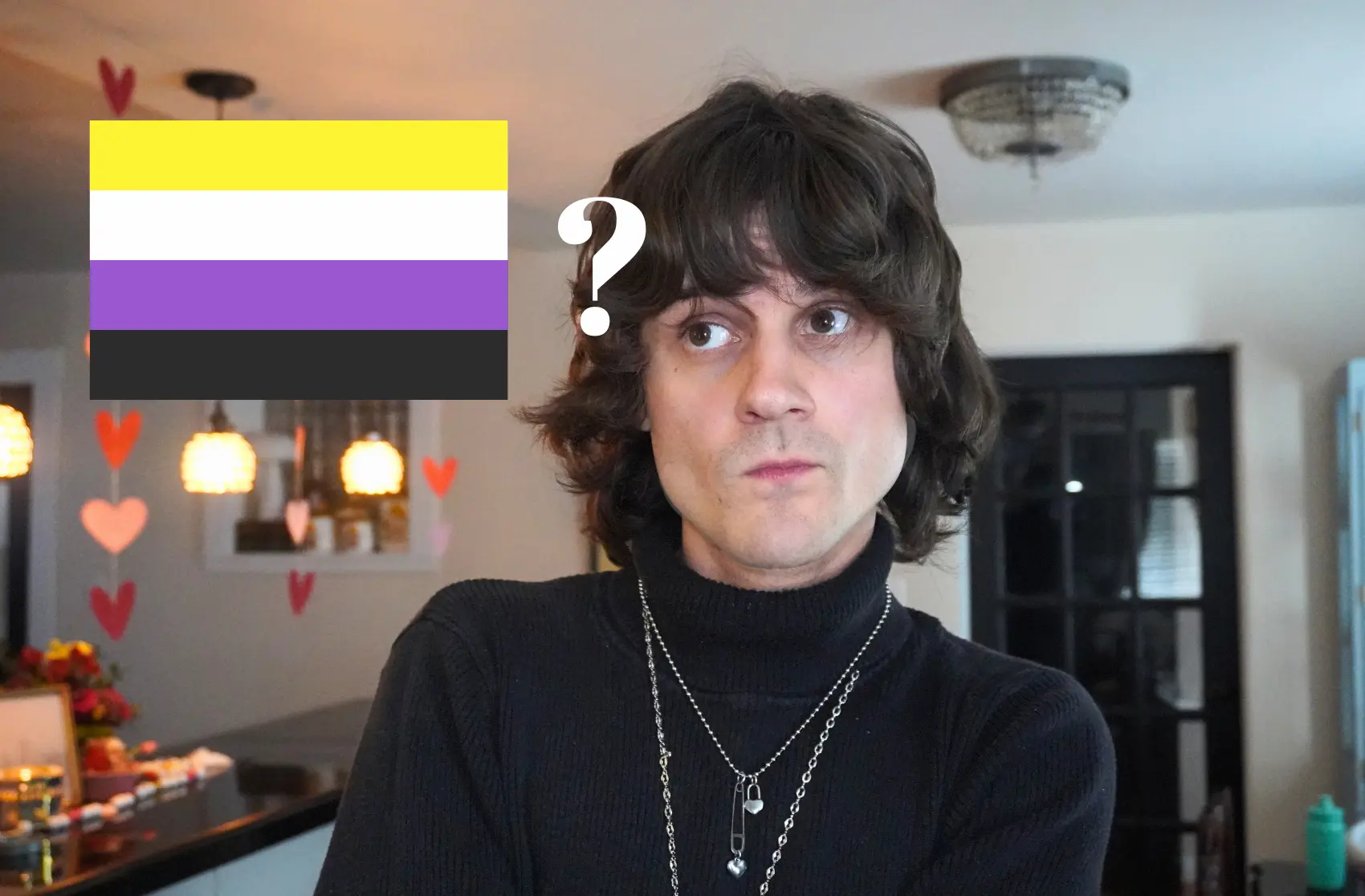
When you’re questioning your gender, it’s easy to want certainty. Changing your gender identity is scary, isolating, and in current society, can be dangerous.
So how do we know?
What Do Trans and Non-Binary Mean?
First - let's get some definitions out of the way:
Sex refers to our physical characteristics - male, female, or intersex. When we're born, doctors look at our body and assign us one of these letters.
Gender is more abstract - it’s a spectrum of identities based on our internal sense of self and social expectations. As a society, we broadly group people into genders based off secondary sex characteristics (examples: man/male, woman/female). But this doesn’t align for everyone. Research suggests each of us is born with some gender leanings that determine how we act, and these are built on by social experiences.1
Dysphoria is a sense of disconnection between your “true self” and the body you're currently inhabiting. It can be mental, physical or both.
Transgender (or "trans") just means your internal gender identity does not align with the sex you were assigned at birth. Trans people can be binary trans, meaning they were assigned male at birth and transition to female, or vice versa. They can also be non-binary, meaning they identify as something outside the gender binary or man and woman.
So how do you know if your gender identity aligns with (or doesn’t) your sex assigned at birth?
The Questioning Period: Am I Trans?
Before trans people can come out, they go through a questioning period to figure out their identity. This often starts as a different presentation than gender dysphoria - generalized anxiety or depression, low self-esteem, or other ways of your brain telling you something is wrong - without a name for the feeling.
At some point, you'll meet someone who's trans, or hear the words “trans” or “non-binary” and get curious. The experiences they describe might be like what you're feeling.
If that sounds like you, start with some basic questions.
Ask yourself:
- What does gender mean to me?
- How would I look/act/refer to myself if I existed outside of all social expectations?
- Mentally - do I feel most connected to the label of man, or woman, or neither?
- Does my current gender label make me feel uncomfortable? Why?
And as you go through the day, notice:
- When do I think about gender throughout the day?
- How do I feel about parts of my body, especially primary and secondary sex characteristics?
- How do I feel in masculine or feminine clothes?
- How do I feel when people used gendered terms toward me? He/him, she/her, dude, bro, girl, etc.
Before I had a word for it, my gender dysphoria presented as low self-esteem that wouldn't go away. I always felt drawn to more feminine clothing and presentation, and like an impostor among my male friends. Eventually I heard a non-binary singer describe gender dysphoria, and so many of the feelings I had struggled with clicked into place.
The Doubt and Fear
Once you realize you may be feeling some gender dysphoria, doubt and feat can quickly set in. We live in a cisnormative society - that means we see being cisgender as "normal" and being trans as "not normal." Trans people are often the victims of hate and violence just because of who they are.
Beyond the social difficulty, overcoming internal obstacles can be a challenge. Early on in my journey, I felt a lot of confusion and impostor syndrome around gender. I used to think people who were trans “always knew” or had an “aha moment” - but for me, it was a much slower, more gradual journey of discovery.
I felt low self-esteem for a long time, and never felt like I fit in with other boys or men. I always felt disconnected from the idea of being a man, but just assumed those thoughts were normal. When I started to understand what being trans and non-binary meant, those feelings started to click into place - but even then, I tried to keep living in my old identity until I physically couldn't anymore.
Claiming Your Identity as a Trans or Non-Binary Person
Once you’ve started to question and notice how your brain relates to your gender, it’s only a matter of time until you fully realize your identity. Once you open the door to those initial realizations that you might not be cis, you'll start to notice more and more.
But there's only one way to be certain of your identity - and that's to actually try it out.
If coming out feels scary, you can experiment with your identity in baby steps. Start with just yourself: try different labels in the mirror or experiment with your appearance at home. Then you can socially transition - come out to trusted friend and have them use your labels. Eventually, you may realize that you want to come out to everyone as a new identity, and maybe physically transition - hormones or surgery. Where you land is entirely up to you!
Despite coming out a few years ago I'm still very much on my journey of gender exploration - and I'm not sure if I'll ever truly feel like I've arrived.
References